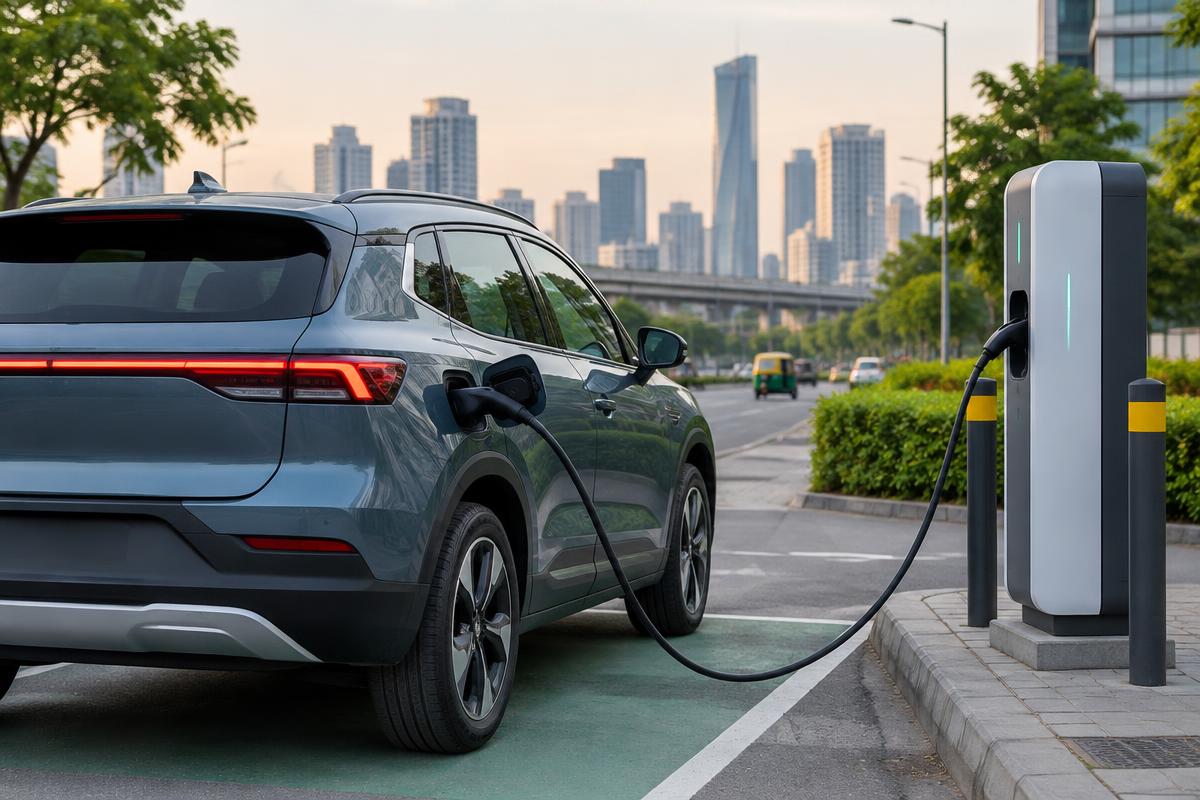
Electric Vehicles in India: Your Comprehensive Guide to EV Adoption
By the Bharat Auto Insights Editorial Team · Last reviewed 17 October 2026
An electric vehicle makes the most sense in India if you can charge at home or at work, drive a predictable daily distance, and plan to keep the vehicle for several years. Running costs per kilometre are typically far lower than petrol, but the purchase price is higher.
Is an EV right for you?
- You have a dedicated parking spot where a charger can be installed (or reliable office charging).
- Most of your daily driving is within the vehicle's comfortable real-world range, with margin.
- Your long trips are on routes with established fast chargers, or you have a second vehicle.
- You value low running costs and quiet driving over the lowest purchase price.
Costs: purchase versus running
EVs cost more upfront than equivalent petrol models, though the gap has narrowed. Electricity cost per kilometre at home tariffs is usually a fraction of petrol cost; public fast charging costs more than home charging. Use our fuel cost calculator to compare with your own numbers.
Road tax and registration concessions for EVs vary by state and change over time, so check your state transport department's current notification before buying.
Charging basics
Home AC charging
A wall-box charger (commonly 3.3kW or 7.2kW) charges overnight. Housing societies may need approval and a separate meter.
Public DC fast charging
Useful on highways for topping up; charging slows as the battery fills, so plan stops around 20–80%.
Battery and warranty
Battery packs typically carry a separate, longer warranty than the vehicle. Read the conditions — some warranties are limited by kilometres as well as years.
Learn more
Our charging infrastructure guide, the beginner's guide to EV ownership and our Tata Nexon EV versus Mahindra XUV400 comparison go deeper. Unfamiliar terms are explained in the glossary.
Guides in this section
Electric
EV charging explained
How EV charging works in India: home AC chargers, public DC fast chargers, connector types, charging apps, costs and planning long trips.
Electric
Nexon EV vs XUV400
Tata Nexon EV vs Mahindra XUV400 compared: size, battery options, range claims, features, charging and which electric SUV fits your needs.
Electric
EV ownership for beginners
What owning an electric car in India is really like: daily charging, range planning, servicing, insurance, battery care and resale.
Electric
Glossary of terms
A plain-English glossary of car, motorcycle and EV terms Indian buyers meet: ex-showroom, on-road price, AMT, ABS, NCAP, kWh, RC, NCB and more.
Tools
Fuel cost calculator
Compare monthly running costs of petrol, diesel, CNG and electric vehicles.
Get the Bharat Auto Insights newsletter
Practical buying advice, new guides and market explainers. No spam; unsubscribe any time.
See our privacy policy.