Understanding EV Charging Infrastructure in India
By the Bharat Auto Insights Editorial Team · Last reviewed 17 October 2026
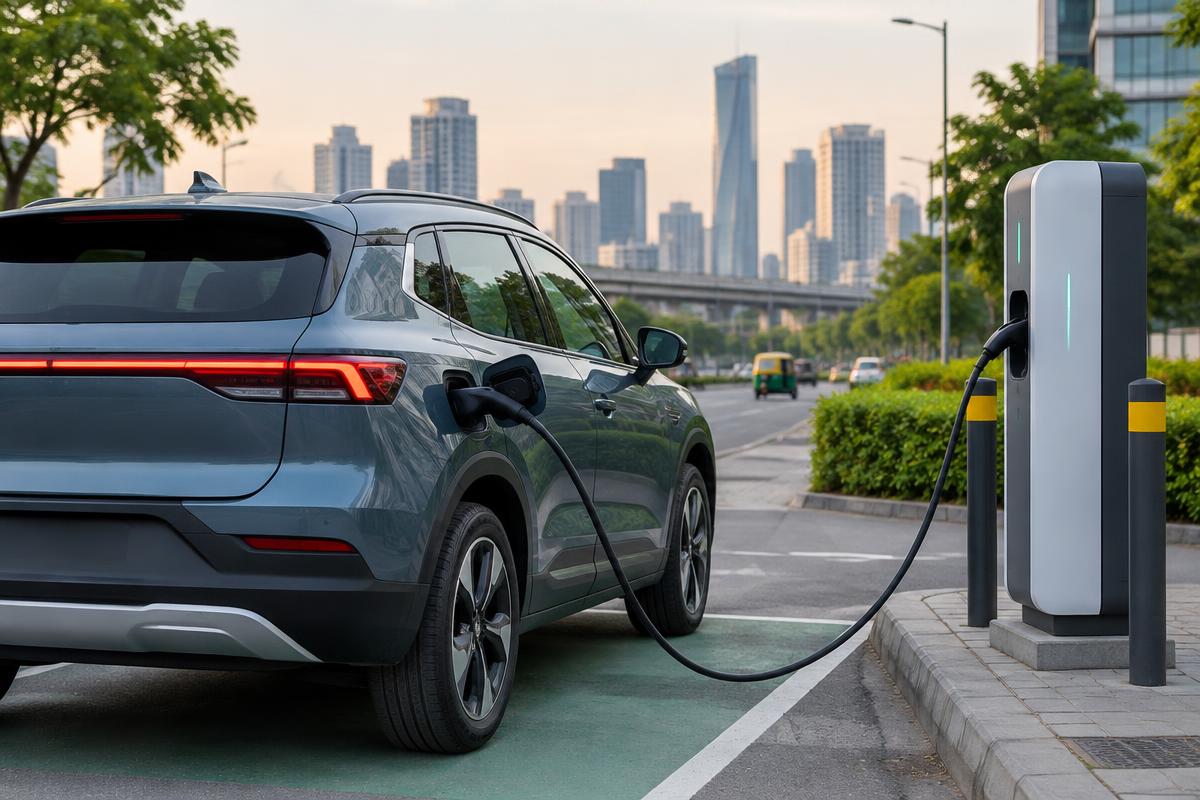
Most EV owners in India do the bulk of their charging at home overnight using an AC wall-box, and use public DC fast chargers for highway trips. Public networks are growing fastest in metros and on major highways; coverage in smaller towns is still patchy.
Types of charging
| Type | Typical power | Use |
|---|---|---|
| Portable / 15A socket | Around 2–3kW | Emergency or occasional top-ups |
| AC wall-box | 3.3kW or 7.2kW | Overnight home or office charging |
| DC fast charger | 25kW to 120kW+ | Highway and quick top-ups |
Connectors
Most current electric cars in India use the CCS2 connector for DC fast charging and Type 2 for AC. Electric two-wheelers use a variety of connectors; check compatibility before relying on a public charger.
Finding and paying for chargers
Charging operators use their own apps for locating chargers, starting sessions and payment. Aggregator apps help plan routes across networks. Check recent user reviews — a charger on the map may be out of service.
Home charging in apartments
- Get written approval from your housing society
- Install from a dedicated parking spot with a separate meter if required
- Ask your electricity distributor about EV tariffs available in your state
Planning long trips
Plan stops between roughly 20% and 80% battery, keep a backup charger in mind for each leg, and allow extra time during holiday periods when chargers are busy.
Keep reading
Electric
EV guide
A practical guide to electric cars and scooters in India: running costs, charging at home and on the road, incentives, battery care and whether an EV suits you.
Electric
EV ownership for beginners
What owning an electric car in India is really like: daily charging, range planning, servicing, insurance, battery care and resale.
Electric
Nexon EV vs XUV400
Tata Nexon EV vs Mahindra XUV400 compared: size, battery options, range claims, features, charging and which electric SUV fits your needs.
Electric
Glossary of terms
A plain-English glossary of car, motorcycle and EV terms Indian buyers meet: ex-showroom, on-road price, AMT, ABS, NCAP, kWh, RC, NCB and more.
Get the Bharat Auto Insights newsletter
Practical buying advice, new guides and market explainers. No spam; unsubscribe any time.
See our privacy policy.